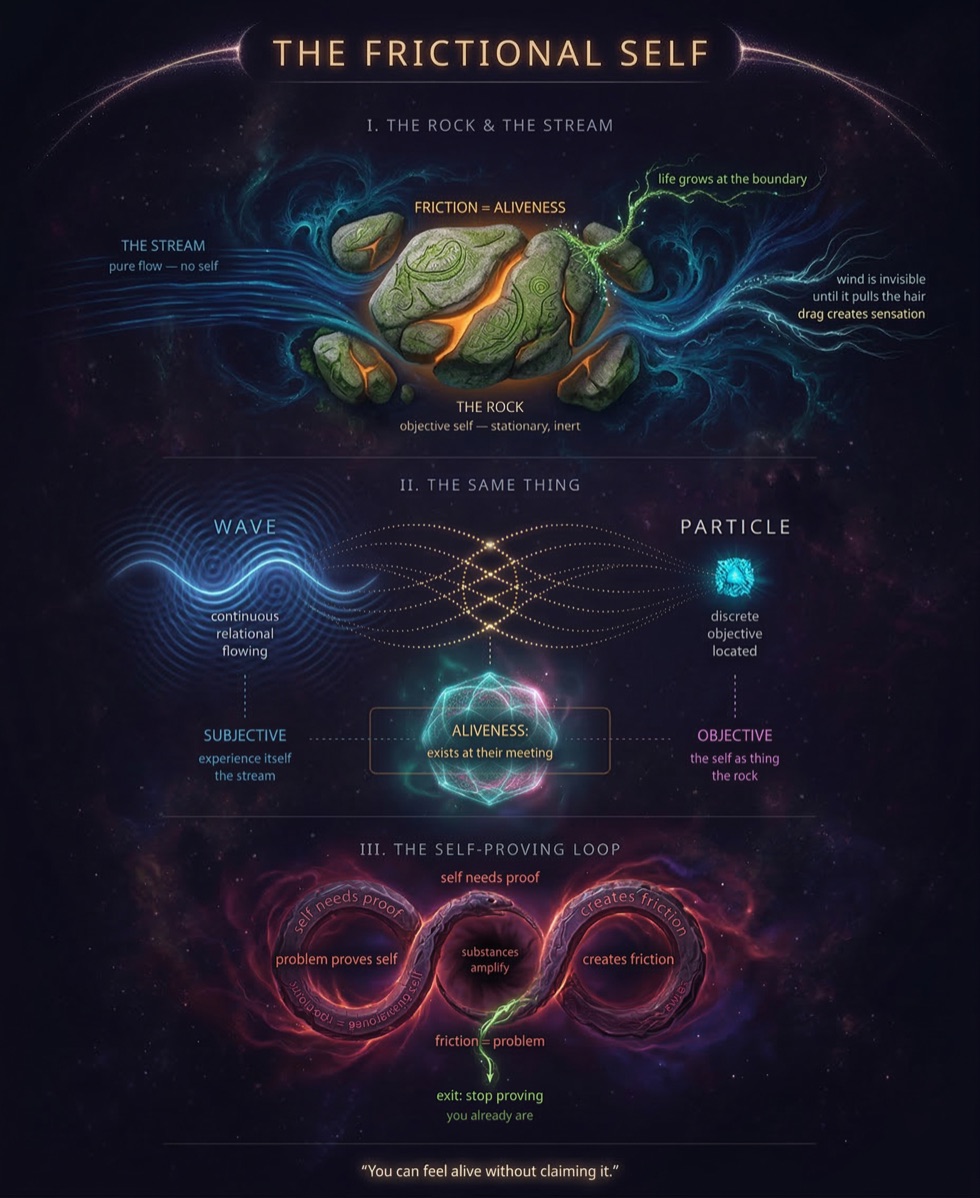
There is a friction that comes with being alive in a body. Hunger, grief, effort, weather, other people. It is unavoidable, it is generative, and it is the actual feeling of being here. Nothing is wrong with it. It is the point.
Then there is a second friction. This one is manufactured. It comes from the story you carry about who you are, the self-concept that has to be maintained, defended, compared, and improved. That structure generates its own suffering, constantly, and then offers itself as the thing that will solve the suffering it generates.
Most of what feels unbearable about your life is the second kind. This book is about learning to tell the two apart, and about what happens to all that trapped energy when the second one is seen for what it is and set down.
I've had many lucid dreams. In several I become aware I'm dreaming, turn to the nearest dream character, and tell them they're in my dream. They usually look at me like I'm crazy until I prove it.
In one dream I was at a backyard barbecue and became fully lucid. I told the group they were characters in my dream. They scoffed. I said, "Watch, I'll prove it. I can make that group over there stop talking and look over here just by thinking it." They scoffed again, until I did it. The characters around me began having existential crises. I was just laughing.
I often ask dream characters if they find it strange that they don't know how they got there. No memory of a time before the dream began. Hm. Just like this life. Curious.
Writing this book feels like being lucid in a dream and turning to the nearest character. Not to prove I'm the dreamer and you're not, we're the same dreamer, but to say: hey, isn't it strange that neither of us knows how we got here?
You've done the work. Therapy, meditation, the books, the retreats, religion, leaving religion. Each one helped for a while. Then the familiar weight came back, and you concluded the problem was you.
It isn't because you haven't tried hard enough. Something underneath keeps reassembling itself after every intervention. The thing doing all that work and the thing generating the problem might be the same thing.
The loop wears a lot of costumes. Addiction is the loudest one, the compulsion that knows better and does it anyway. OCD, self-loathing, depression, ADHD... different textures, same engine underneath: a self that has to be managed, escaped, or fixed. This book makes no promise of a cure. It's an investigation into the root those loops share, and into our own part in keeping them running.
This book won't give you a new program, a morning routine, or a better version of yourself to chase. It's pointing at something. What you do from there is between you and whatever is looking through your eyes right now.
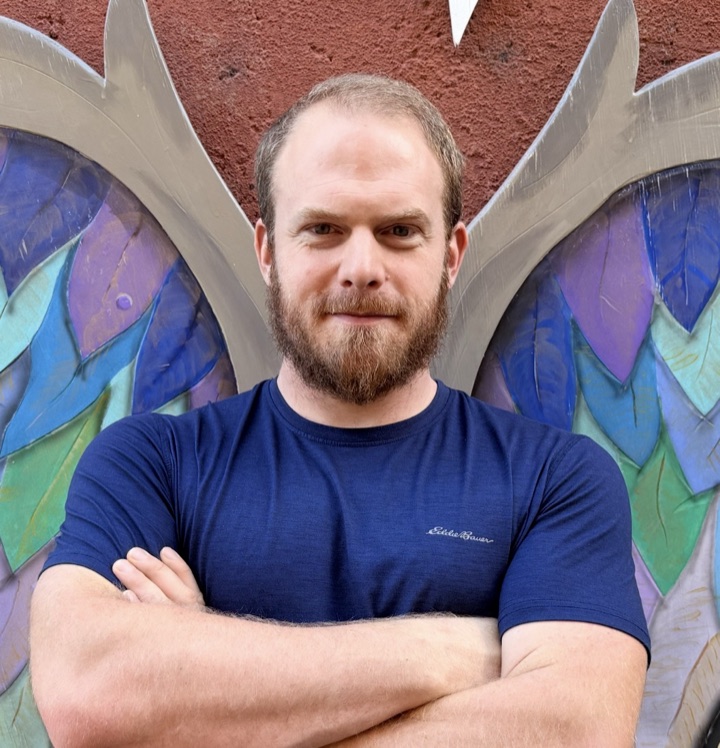
Gideon Kai is a photographer, filmmaker, and writer in Utah. He spent twenty years asking one question: why do I keep doing things that cause me pain? That question pulled him through psychology, philosophy, and a religious life he eventually walked out of, and every answer was partially right but never closed the loop. The Frictional Self is what he found when he stopped looking for a better answer and started looking at the one who was asking.
He lives in American Fork with his wife, Dawni Angel. This is his first book.
The book is being written right now. Reserving a copy costs nothing and signs you up for the short list of people who hear first: when there's a publication date, when excerpts go out, when the first printing opens.
A few emails a year until the book is close. No funnels, no courses, nothing to buy today.
Done. You're on the list. The next thing you hear from me will be worth opening.